Brick Parable
INSTALLATION ARCHITECTURE
BRICK PARABLE
Yale School of Architecture Gallery, New Haven, CT
On View: January 9 – July 5, 2025
National Building Museum, Washington, D.C.
On View: February 28, 2026 – January 2027
HB Curatorial commissioned this sculpture for The Tuskegee Chapel: Fry & Welch (Louis Fry, Sr., and Col. John Welch) and Paul Rudolph, to communicate ongoing evidence of Tuskegee’s longstanding culture of masonry innovation. Brick Parable is inspired by Rudolph’s parabolic roof shape and Fry & Welch’s novel detailing of non-orthogonal intersections of brick in the Tuskegee Chapel. Constructed using robotic stacking, the sculpture represents the latest technology in masonry construction even as it evokes a historic form.
As a Tuskegee alumnus, Myles B. Sampson has a deep understanding of and reverence for the role of brick as a historic and symbolic material on the Tuskegee campus. With his future-forward sculpture, the artist situates his work within the University’s long continuum of fostering the practice of masonry construction.
About the Artist
A graduate of Tuskegee University (B.Arch, ‘19) and MIT (SMArchS, ‘22), Myles B. Sampson is currently pursuing a PhD in Computational Design at Carnegie Mellon University. His research focuses on the future of construction technology, particularly concerning the role of industrial robotics and digital fabrication in traditional design and building practices. He brings a long-standing interest in sculpture and formal experimentation to his research.
Artist’s Statement
This sculpture couples the use of a historic material with an innovative construction practice, as robotic stacking is widely recognized as the future of brickwork with the chance to improve and develop everything from boundary-pushing forms to worker safety and efficiency. The bricks are assembled in this unique form using an industrial robotic arm programmed by the artist. The project invites questions of authorship and collaboration, provoking the audience to consider automation and assembly as a new analogy for the potter’s hand and clay.
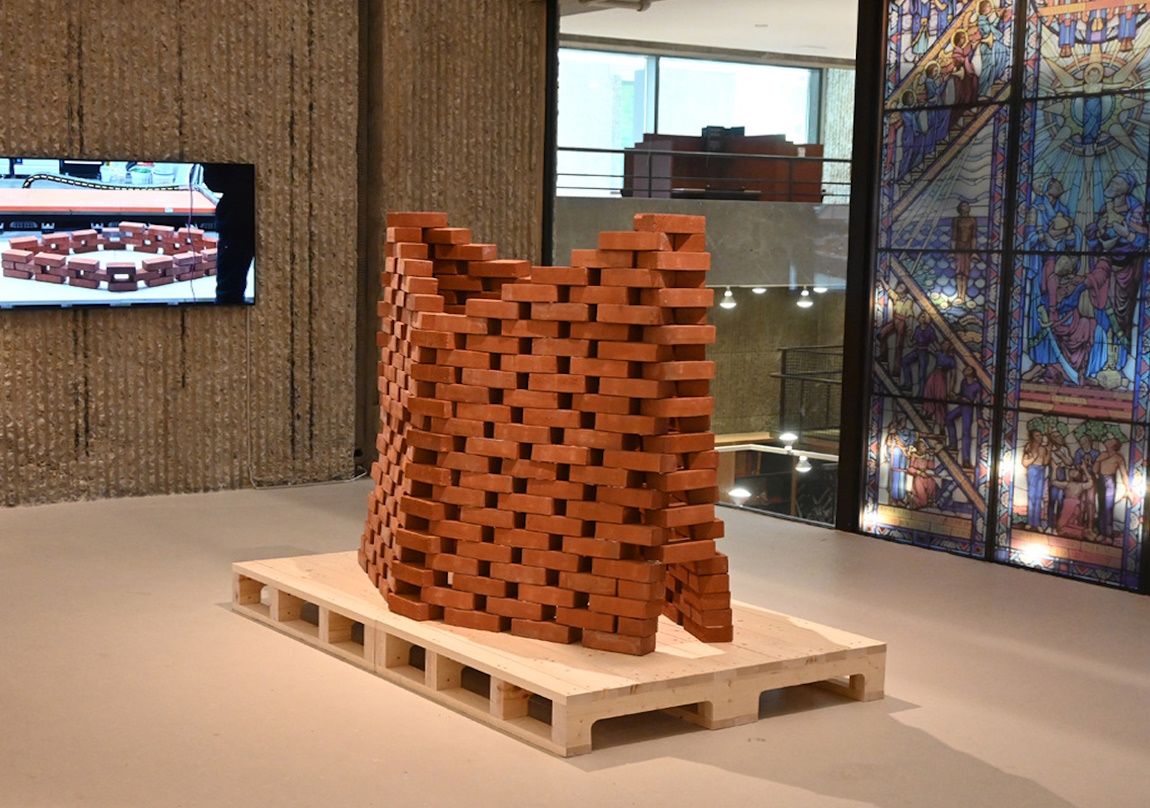
Photo by Benjamin Piascik
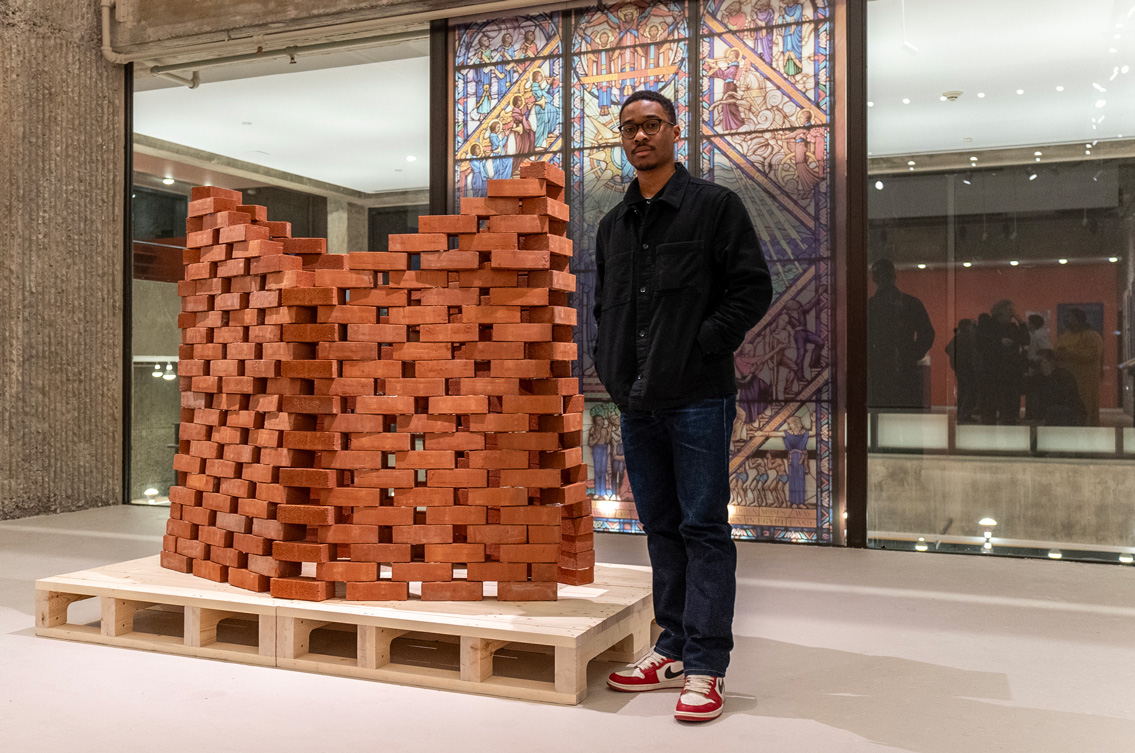
Photo by Benjamin Piascik
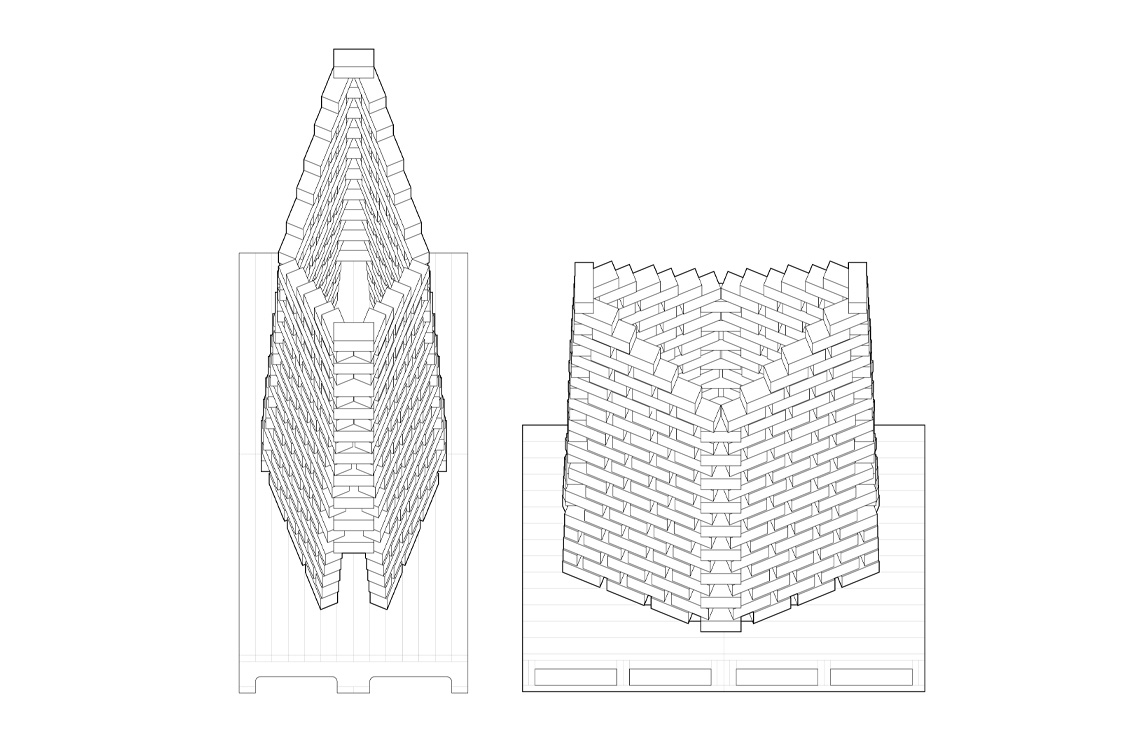
Renderings by Myles Sampson
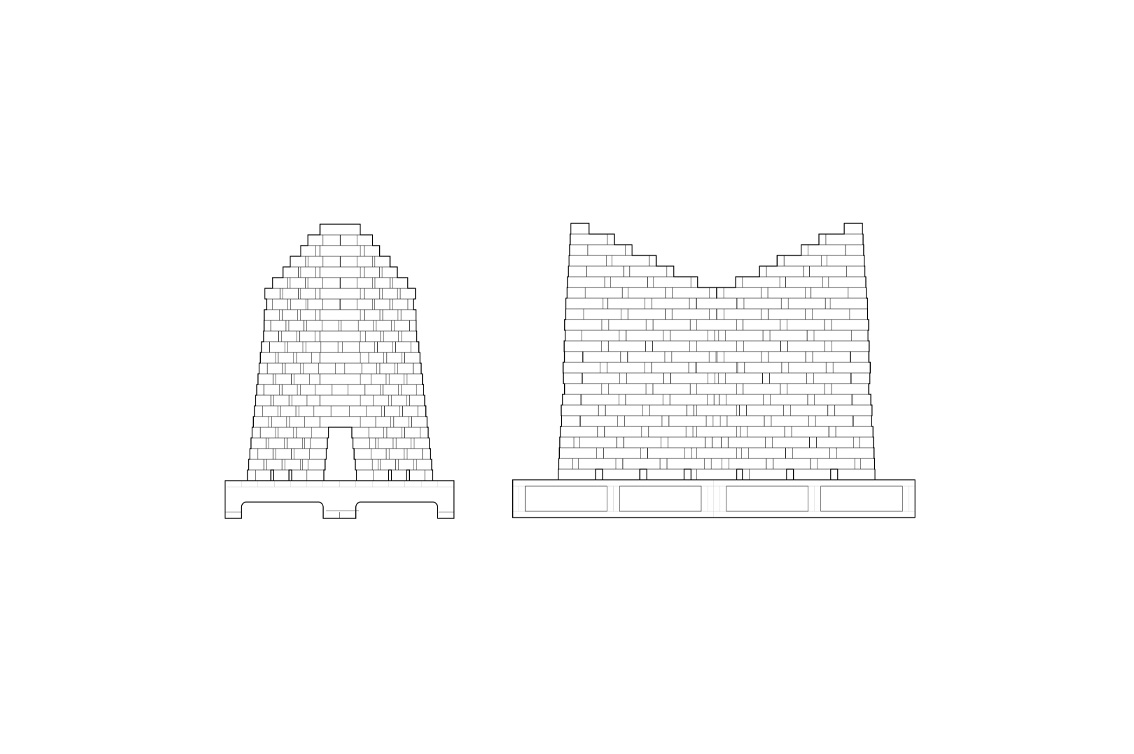
Renderings by Myles Sampson