Practicing Pluralism
EXHIBITION
Practicing Pluralism
Yale School of Architecture Gallery, New Haven, CT
On View: August 27 – December 4, 2026
This exhibition features one project each from twenty-one architects who have taught advanced studios at Yale between 2016 and 2026. Despite the plurality of their design approaches, the architects represented are united around the core assertion that architecture holds the ability to address some of the world’s most pressing questions. The exhibition grounds itself in YSoA’s time-honored tradition of pluralism, here marking its evolution from an openness to stylistic diversity to the structural incorporation of numerous worldviews and design methodologies. Through a variety of media, the projects in this exhibition illustrate recent, current, and future-forward methods and design attitudes that shape the Yale School of Architecture’s distinct culture. In this exhibition and at YSoA, pluralism is an ongoing, ever-evolving practice.
Over its 110-year history, Yale School of Architecture (YSoA) has consistently reexamined and redefined how its pedagogical attitude addresses the potentials of design. In his 2016 history of the school, Pedagogy and Place, former Dean Robert A. M. Stern reflected on this periodic reevaluation, introducing the concept of a “strong dean model.” He argued that the pedagogical stance of the school has evolved in an episodic manner to reflect the individual values of its leadership, even as it has maintained its commitment to the academic studio. In 2026, as we mark Deborah Berke’s tenth year as dean, YSoA mounts an exhibition that takes the opportunity to examine the trajectory of its pedagogy under her leadership.
As the world experiences even greater strains on our population growth, urban infrastructure, and climate, architecture at Yale has increasingly been explored as a practice of societal engagement. Dean Berke has regularly stated that “design is an instrument for meaningful and substantive change.” Within Rudolph Hall, architecture is not viewed as a self-sufficient discipline, but rather as a practice that operates within an entangled world. Design can synthesize voices in a polyphonous dialogue — one that enables architecture to take shape and be recognized ‘in relation’ to something else and to others. Though the rapid development of artificial intelligence may be strengthening tools of production, the architect’s humanity and judgment are ever more important as we use design to respond to the toughest societal questions.
Dean Berke’s focus on this imperative of social engagement has led her to attract and recruit advanced studio faculty who see architecture as a means through which to inquire about and intervene in cultural-spatial questions, and who view this perspective as a consistent underpinning to their work. Building on YSoA’s core curriculum, over the past ten years more than 120 faculty members have taught capstone studio courses that have exerted significant influence on the culture of the school, demonstrating and teaching diverse methods of design. To acknowledge this influence, this exhibition features one project each from twenty-one architects who have taught Advanced Studios between 2016 and 2026. Despite the plurality of their design approaches, the architects of the twenty-one projects are united around the core assertion that architecture holds the ability to address some of the world’s most pressing questions. These projects reveal architecture’s kaleidoscopic character and represent the attitudes and approaches guiding YSoA’s current pedagogy. Above all, these projects underscore the imperative for architects to become active agents as they use architecture as their medium.
The exhibition grounds itself in YSoA’s time-honored tradition of pluralism, here marking its evolution from an openness to stylistic diversity to the structural incorporation of numerous worldviews and design methodologies. However, within this commitment to pluralism there is a consistent emphasis on the importance of design and building as a medium, a tangible manifestation of collaboration, process, and methodology. Through a variety of media — models, architectural drawings, diagrams, films, historic artifacts, collages, murals, photographs, material samples, animations, and artistic renderings — the projects in this exhibition illustrate recent, current, and future-forward methods and design attitudes that shape Yale School of Architecture’s distinct culture. Ranging from Francis Kéré’s canopy design for the Las Vegas Museum of Art that creates a unique and inclusive social space for the city, to Tatiana Bilbao’s adept and poetic response to complex, overlapping human and biological systems in the Sea of Cortez Research Center, these 21 projects illustrate myriad ways that architects can approach the power of design to relate to and respond to our environments and cultures. Four thematic groups identify a design approach: Stewarding, Assembling, Remembering, and Mediating.
FEATURED ARCHITECTS INCLUDE:
Sandra Barclay and Jean Pierre Crousse
Ann Beha
Tatiana Bilbao
Patrick Bellew
Fernanda Canales
Kevin Carmody and Andy Groarke
Rachaporn Choochuey
Chris Cornelius
Teddy Cruz and Fonna Forman
DOGMA
Frida Escobedo
Francis Kéré
Momoyo Kaijima
Kabage Karanja and Stella Mutegi
Anupama Kundoo
Ma Yansong
Alan Ricks
Marina Tabassum
Chat Travieso
Billie Tsien
Zhu Pei
About the Yale Architecture Gallery
The exhibitions program at the Yale School of Architecture was founded in 1979 by Cesar Pelli and George Ranalli. Since then, it has evolved into a critical space for the exploration of architectural ideas and discourse in New Haven and beyond. The Yale Architecture Gallery, located in the famous Paul Rudolph Hall (formerly the Yale A+A Building), is one of the largest exhibition spaces dedicated to architecture in the United States.
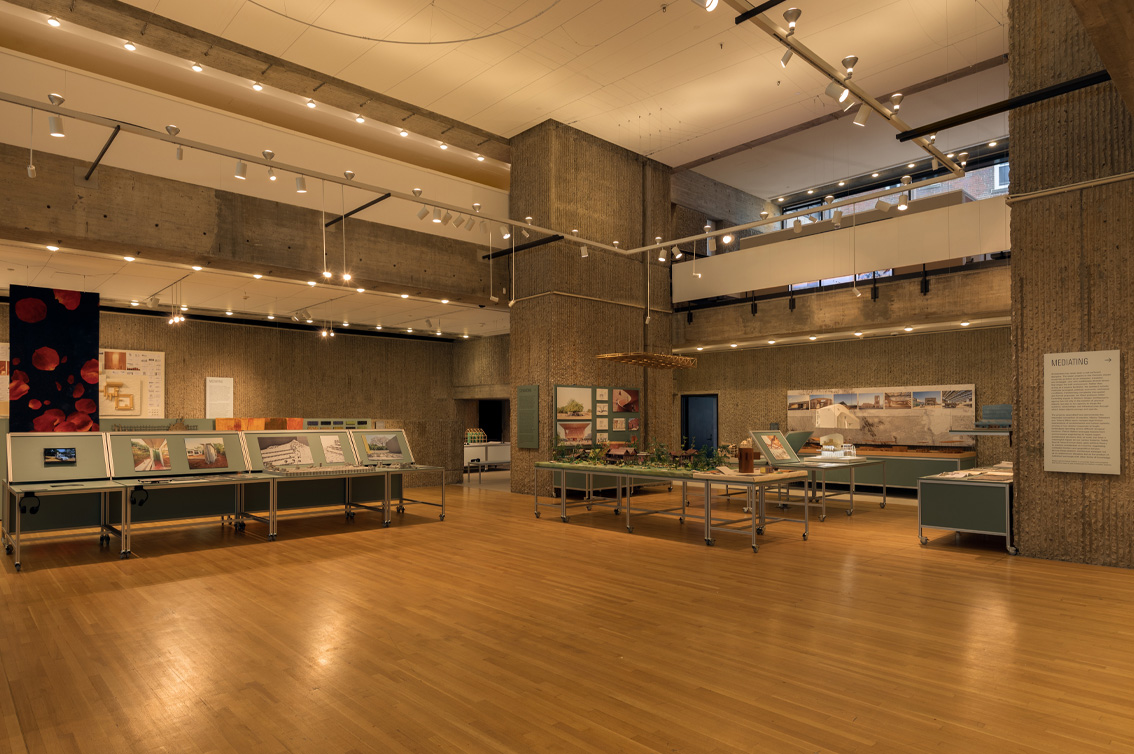
Photo by Logan Ali
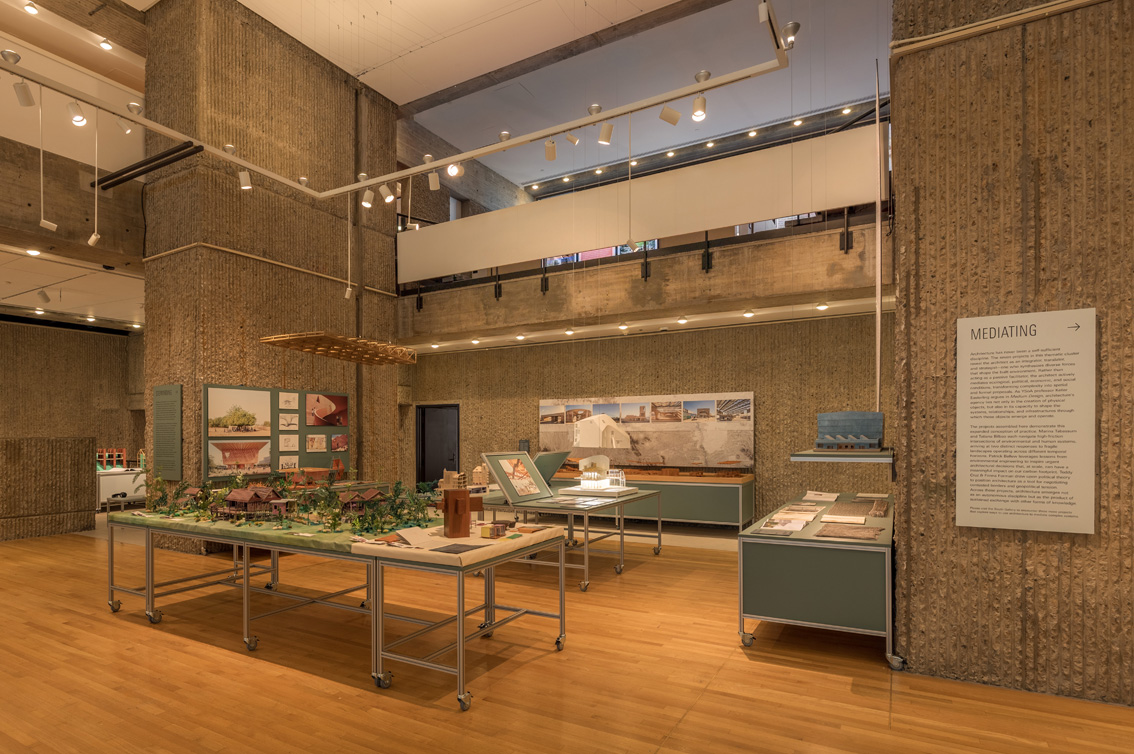
Photo by Logan Ali
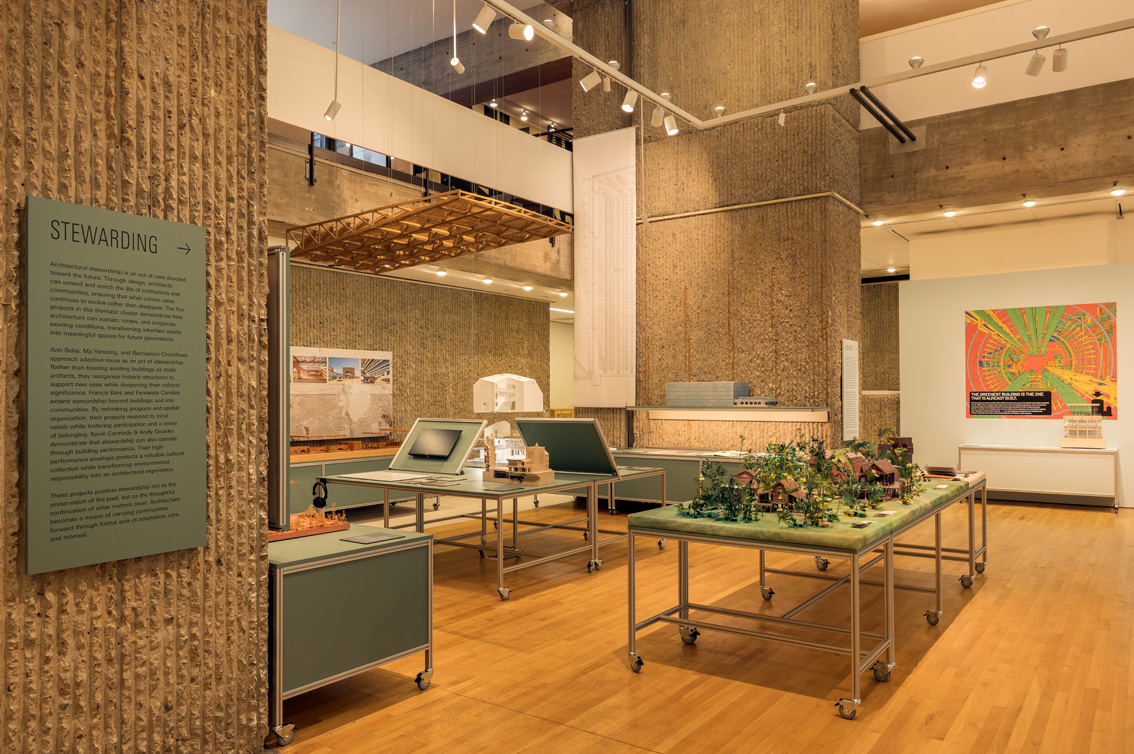
Photo by Logan Ali
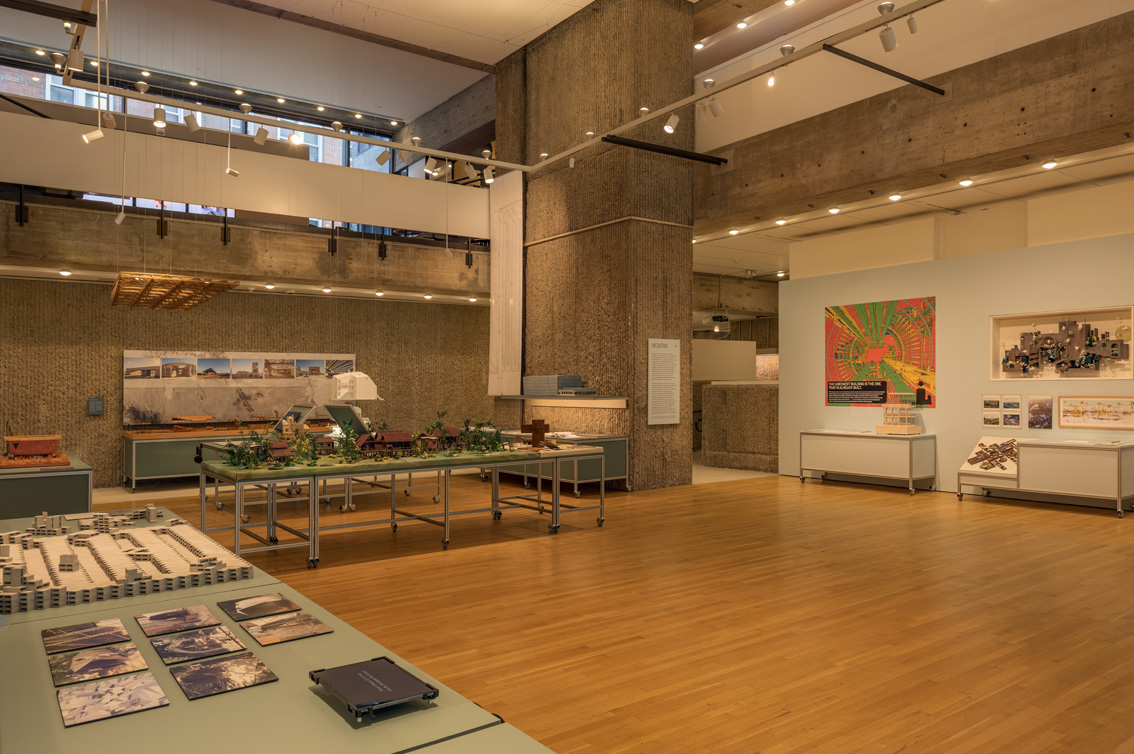
Photo by Logan Ali